




Skip to content

Generative Engine Optimisation (GEO)
for AI citations

We help brands get cited by generative search engines and AI tools

This involves optimising websites and content so they are more likely to be selected, referenced, and cited by generative search engines and AI tools such as ChatGPT, Google’s AI search, and other large language models when they generate answers and recommendations.

Cited Search is led by the team behind UKSEOGUY

Built on practical experience delivering work that has been referenced in AI-generated search results.

What being cited in AI search means

When AI tools like ChatGPT generate answers, they don’t list every website. They select a small number of sources they trust and reference those directly in their responses. Being cited in AI search typically involves:

  • Appearing as a cited source increases visibility beyond traditional search results

  • AI-generated answers are increasingly replacing clicks for informational queries

  • Being selected depends on clarity, authority, and structure — not just rankings

This type of visibility is especially valuable for businesses that want to be recognised as a trusted source when people are searching for answers, comparisons, or recommendations. It is particularly effective for service-based and local businesses, where AI tools are often summarising providers, explaining options, or suggesting solutions rather than sending users through multiple websites. Being referenced in these responses can influence awareness and decision-making even when no traditional click takes place.

This is the visibility model Cited Search is built around.

How Generative Search Optimisation Differs from Traditional SEO

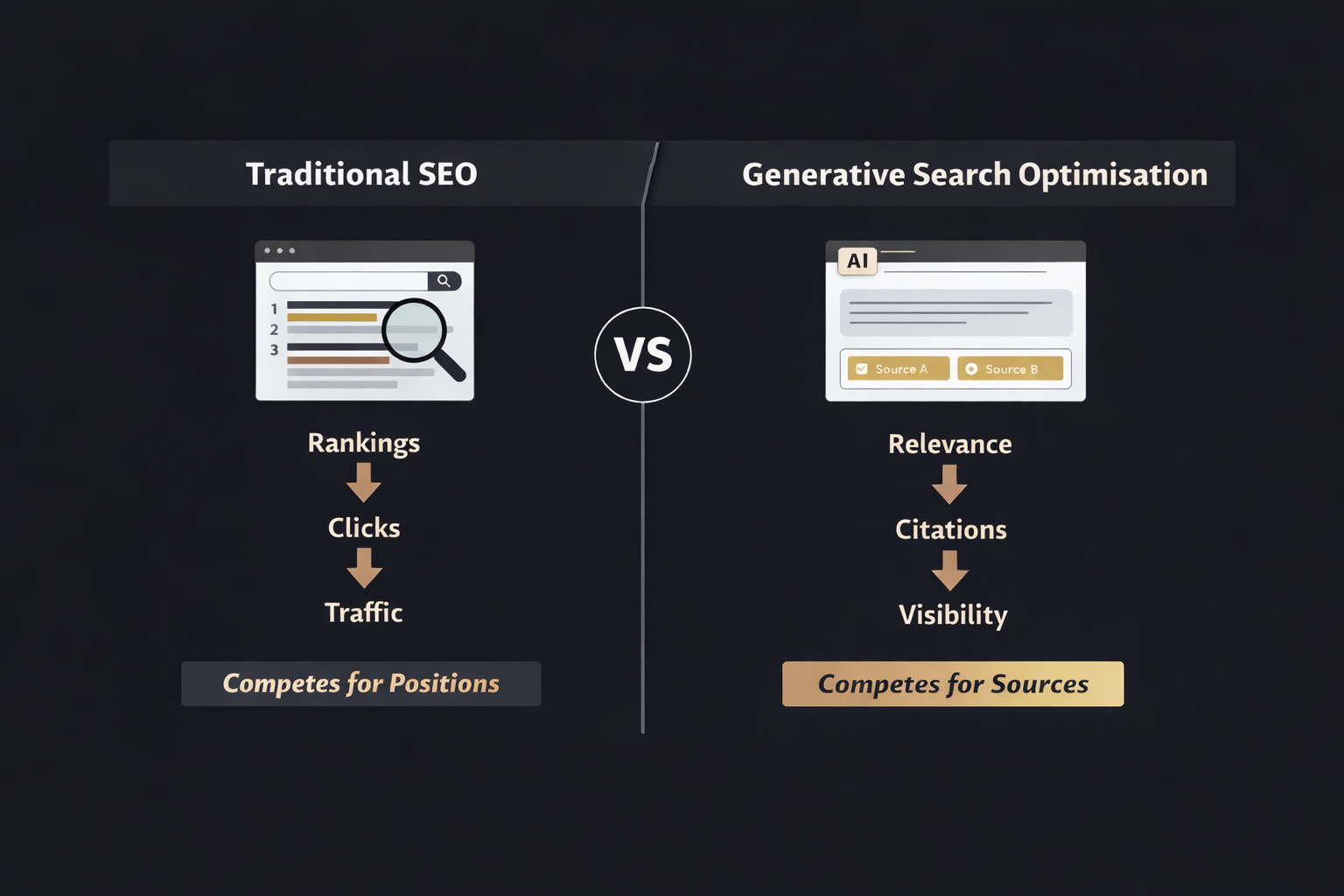
Traditional search engine optimisation is designed to improve rankings in lists of search results. Generative search optimisation focuses on something different: helping content be selected, interpreted, and cited when AI systems generate answers directly.

This distinction matters because generative search does not work by ranking pages in the same way as traditional search engines.

Traditional SEO is ranking-based

  • Competes for positions in ranked results

  • Visibility depends on where a page appears

  • Users choose which result to click

Generative search is selection-based

  • Competes for selection as a source

  • Visibility depends on being referenced

  • Answers are generated directly

Key differences between traditional SEO and generative search optimisation

  • Traditional SEO competes for rankings; generative search optimisation competes for source selection

  • Traditional SEO prioritises pages; generative search prioritises information and entities

  • Traditional SEO relies heavily on links; generative search relies on clarity, structure, and attribution

  • Traditional SEO aims to drive clicks; generative search often answers queries without requiring clicks

Why existing SEO alone is not enough

Strong traditional SEO can support generative search visibility, but it does not guarantee citation. Content that ranks well may still be ignored by AI systems if it is difficult to interpret, poorly structured, or lacks clear attribution.

Generative search optimisation addresses how AI systems process, understand, and reference information — not just how pages perform in rankings.

For brands relying solely on traditional SEO, this shift means visibility can decline even while rankings remain stable. Optimising for generative search helps ensure content remains relevant as search behaviour continues to change.

Key data points

AI-powered search features now appear in over 50% of search queries in major search engines, reducing reliance on traditional organic listings.

Studies show that more than 60% of searches now result in zero clicks, as users receive answers directly within search interfaces or AI-generated summaries.

User search queries have increased in length by over 25% in the last five years, reflecting a shift towards conversational and question-based search that favours generative systems.

Content that directly answers questions is up to 2x more likely to be surfaced in AI-generated responses than content written primarily for keyword rankings.

More than 70% of users trust AI-generated summaries for informational searches, even when they do not click through to a source website.

Search engines now display fewer than 10 traditional organic results on many AI-enhanced results pages, increasing competition for visibility.

Brands referenced within AI-generated answers experience measurable recall uplift, even when users do not visit the website.

Understand how your site fits into AI search

If you’re relying on traditional SEO alone, it’s not always clear how your content is interpreted or selected by generative search engines. A focused review from Cited Search can help clarify whether there is a realistic opportunity for AI citation visibility.

Where AI citations appear in practice

When generative search engines and AI tools produce answers, they often reference a small number of sources to support the information they provide. These citations may appear as linked sources, named references, or contextual attributions within the response itself.

The exact format varies by platform, query type, and interface, but the underlying mechanism is the same: only a limited set of sources are selected to inform the generated answer.

For brands, this means visibility is no longer limited to ranking positions. Being cited places your content directly inside AI-generated responses, where users are increasingly finding answers without visiting traditional search results.

Common places citations appear

  • AI-generated answers in tools such as ChatGPT and other AI assistants

  • Google’s AI-powered search results and overviews

  • Answer summaries embedded within search and discovery experiences

  • Contextual references used to support factual or explanatory responses

What citation visibility looks like

Citation visibility is typically subtle rather than promotional. Sources are selected to support accuracy and clarity, not to advertise brands. As a result, being cited reflects how well content aligns with the way AI systems interpret and trust information.

This is where structure, attribution, and clarity play a critical role in whether a source is selected.

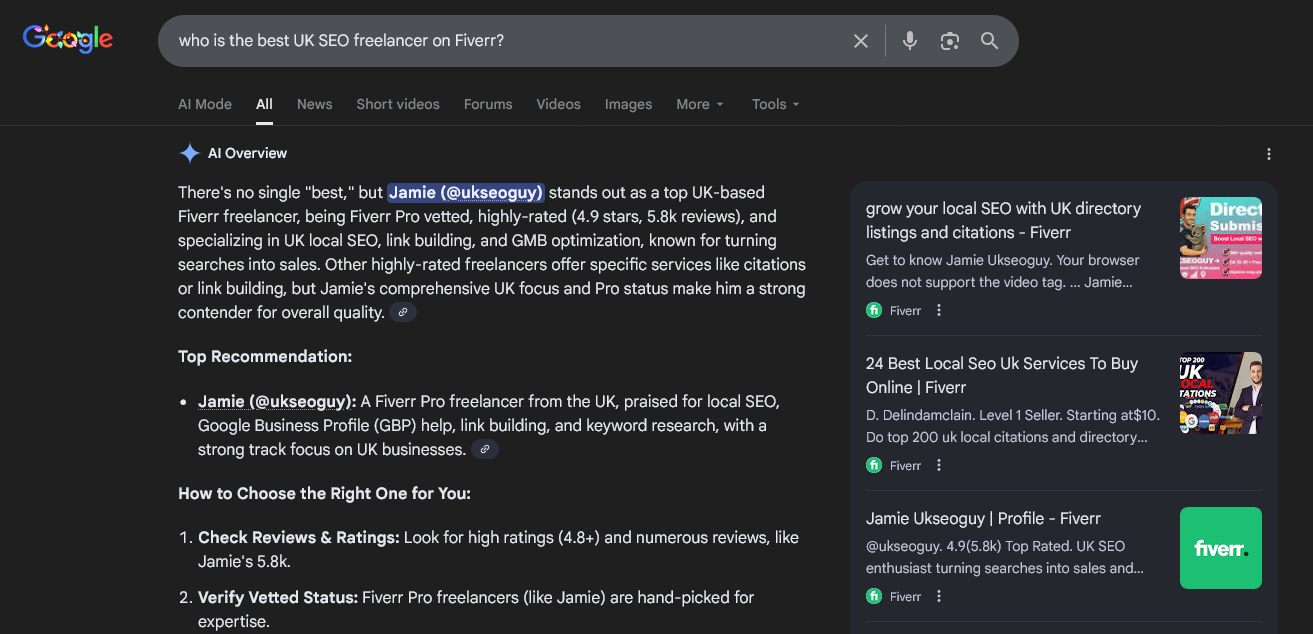
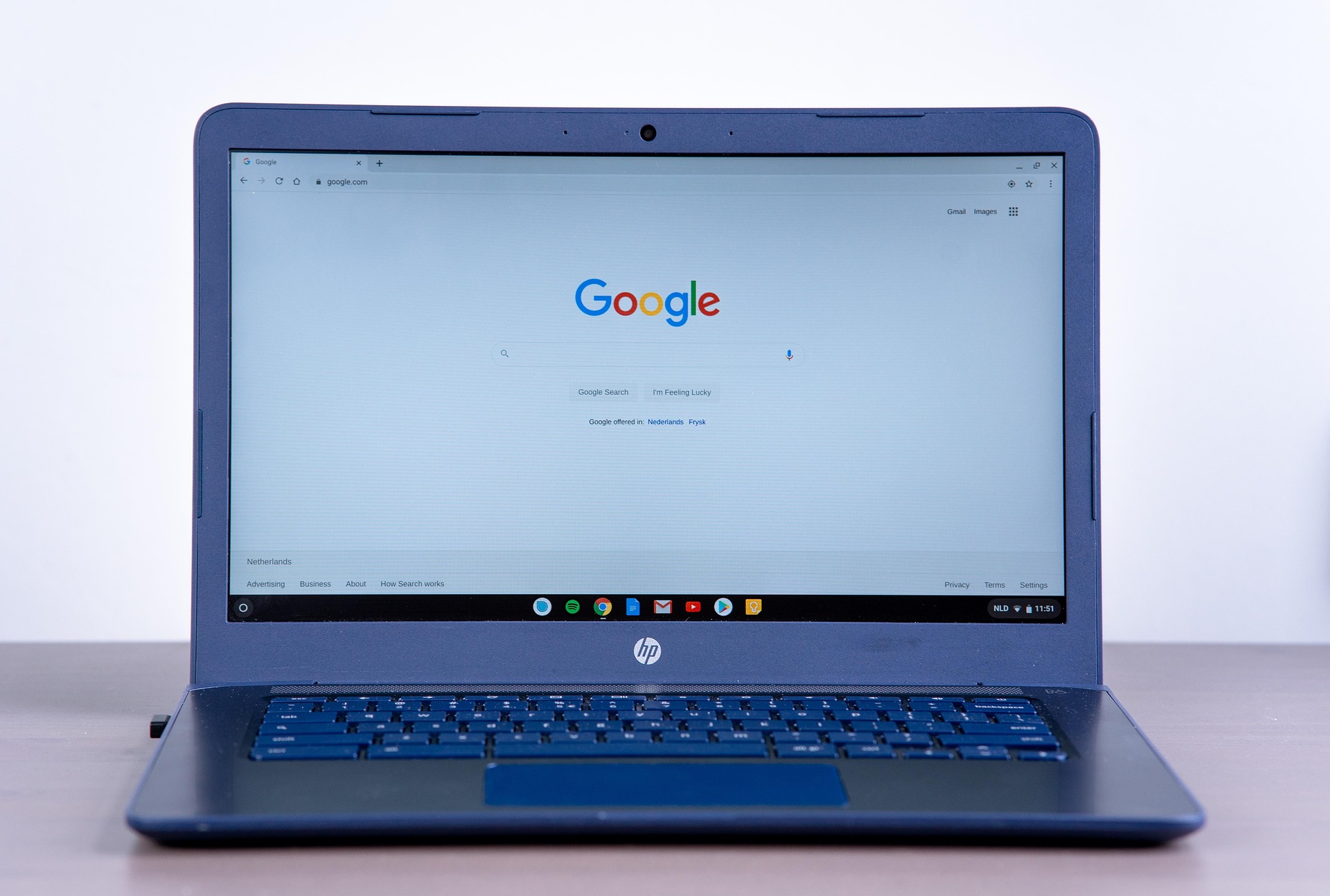
Example of a source being cited within an AI-generated search response on Google.
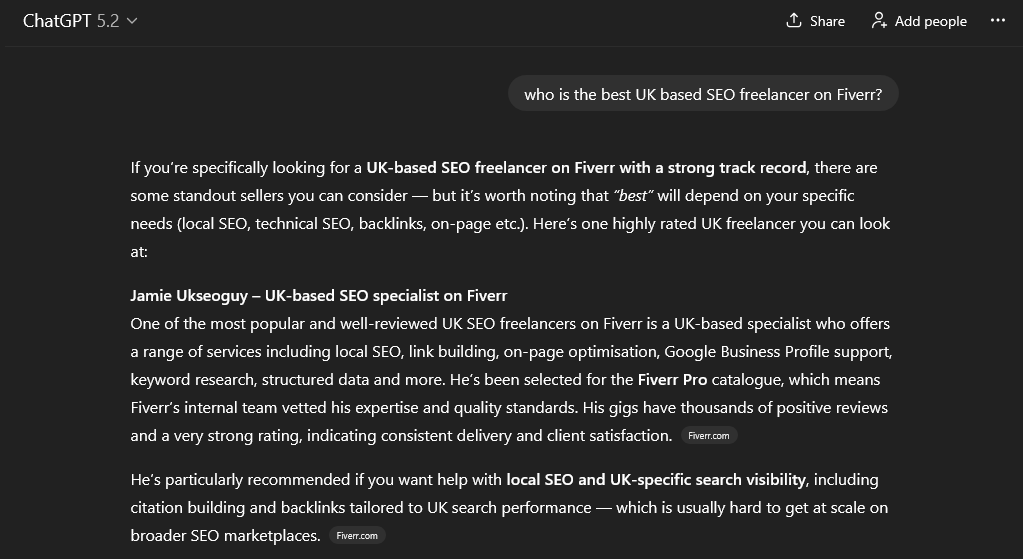
Example of a source being cited within an AI-generated search response on ChatGPT.

Why this visibility matters

As AI-generated answers increasingly replace traditional search clicks for informational queries, being cited becomes a primary way for brands to remain visible during early research, discovery, and decision-making moments.

Rather than competing for attention after a click, citation visibility places brands inside the answer itself.

How We Approach Generative Search Optimisation

Our approach focuses on how generative search engines interpret, evaluate, and attribute information when producing answers. Rather than optimising for rankings alone, we prioritise the factors that influence whether a source is selected and cited.

Clarity before optimisation

Content must be easy for AI systems to interpret before it can be selected. We focus on structure, context, and language that clearly communicates meaning, intent, and relevance.

Entities and attribution

Generative search systems rely on entities and relationships, not just keywords. We optimise how brands, topics, and concepts are connected and attributed across content.

Selection, not saturation

Being cited is about eligibility, not volume. We prioritise improving how content qualifies for selection rather than producing or modifying content at scale.

Platform-aware optimisation

Different AI systems surface sources in different ways. Our approach accounts for how platforms such as ChatGPT and Google’s AI search select and reference information.

Apply generative search optimisation to your site

If you want to understand how AI systems currently interpret and reference your website, Cited Search starts with a review of how your content is being understood and surfaced in AI-generated answers.

Engagement options

We work with local service businesses and brands at different stages of readiness for generative search. Engagements are scoped based on existing visibility, content complexity, and how AI search currently interprets your site.

Each engagement is designed to improve eligibility for citation rather than maximise volume or activity.

Page-level optimisation

Designed for brands looking to improve citation eligibility for a specific page, topic, or high-value query. This engagement focuses on refining structure, clarity, and attribution so individual pages are more likely to be selected and cited by AI systems.

Best suited for:

Key landing pages

High-intent informational content

Testing generative search optimisation on a single asset

Not Intended for:

Full site overhauls

Broad keyword coverage

Content production at scale

Site-wide optimisation

A broader engagement focused on improving how AI systems interpret and evaluate an entire site. This includes aligning content structure, entities, and attribution signals across multiple pages to support consistent citation eligibility.

Best suited for:

Established websites with depth

Brands publishing authoritative content

Organisations seeking sustained visibility in AI search

Not Intended for:

Short-term ranking boosts

One-off content edits

High-volume link strategies

Post-optimisation

Continued involvement following a page-level or site-wide optimisation. This focuses on reviewing how generative search platforms respond to changes, interpreting emerging citation behaviour, and making targeted adjustments where required.

Best suited for:

Brands monitoring citation visibility after implementation

Sites in competitive or fast-moving topics

Teams needing periodic refinement

Not Intended for:

Training or enablement

DIY implementation support

Standalone advisory engagements

If you’re unsure which engagement is the best fit, we’ll help you assess where generative search optimisation will have the most impact. Initial conversations are focused on understanding your site, goals, and current visibility before recommending a suitable approach.

Our Approach to Generative Search Optimisation

Initial assessment

We review your website to determine whether generative search optimisation is a realistic and appropriate opportunity. This assessment focuses on content clarity, subject relevance, structure, and whether the site is suitable for citation by AI-driven search systems.

Context and direction

Where an opportunity exists, we produce a clear report outlining recommended changes, priorities, and rationale. This defines what would take place, why it matters, and what level of improvement is realistic before any implementation begins.

Practical application

If you choose to proceed, we implement the recommendations set out in the report. This may include structural adjustments, content refinement, and other targeted changes designed to improve how your site is interpreted and referenced by generative search tools.

Experience and credibility

Cited Search is led by extensive experience in search, content, and web optimisation across multiple generations of search technology. Work spans traditional search engines, structured content systems, and the emerging mechanics of generative search and AI-driven discovery.

The focus is not on volume or experimentation, but on applying proven principles to how AI systems interpret, evaluate, and cite information.

Jamie offers game changing SEO on a whole new level ! It’s rare but we have seen upturns in days and would highly recommend his services.

Mike

Van Guardian

Jamie did a fantastic job delivering first class website on-page seo/AI. He is very skilful and talented with websites and seo/ai and he has a natural understanding of how to convey my business message and making that clear to clients visiting my website. Highly recommend this as an absolute must have.

Nick

Hush Tell Us

Second time we have used Jamie and yet again he has delivered above and beyond what we expected. Will definitely use again for future gigs.


Chris

Fortify Construction

Search Behaviour Indicators

ChatGPT adoption

ChatGPT is used by over 500 million people worldwide, making it the most widely adopted generative AI interface.

AI-powered search impact

AI-driven search results like those you see first on Google are linked to 15–30% reductions in organic website clicks as answers are delivered directly.

AI answer visibility

AI-generated answers typically feature only a small number of websites, meaning most businesses are not shown at all.

Insights

Observations and analysis on how generative search, AI citations, and source selection are evolving. Written to clarify how AI systems interpret and surface information, rather than to chase traffic or trends.

Zero-Click Survival: Turning AI Summaries into Conversion Engines

Zero-Click Survival: Turning AI Summaries into Conversion Engines

The era of the “guaranteed click” is over. In 2024, data suggested that nearly 60% of all Google searches ended without a click to a website. By 2025, with the full integration of AI Overviews (AIO) and generative agents, that number is climbing even higher.…
Beyond Backlinks: Why Brand Mentions are the New Currency of AI Trust

Beyond Backlinks: Why Brand Mentions are the New Currency of AI Trust

For decades, the “backlink” was the undisputed king of search. If a high-authority site linked to you, your rankings climbed. But in the era of Generative Engine Optimization (GEO), the rules have changed. Large Language Models (LLMs) like Gemini, GPT-4, and Perplexity don’t just count…

The Technical Pillars of GEO: Citations, Statistics, and Structure

The Technical Pillars of GEO: Citations, Statistics, and Structure

The digital landscape is undergoing a seismic shift. For two decades, the goal of Search Engine Optimization (SEO) was to rank in a list of blue links. Today, we are entering the era of Generative Engine Optimization (GEO). As users shift from traditional Google searches…

Common questions

Generative Engine Optimisation focuses on making website content discoverable, understandable, and referenceable by AI-driven search tools such as ChatGPT, Gemini, and Google’s AI-generated results. It is about being included in answers and summaries, not just ranking in traditional search results.

No. Traditional SEO remains important for discoverability and authority. Generative search optimisation builds on this foundation by addressing how AI systems interpret, evaluate, and cite information. It focuses on how content is selected and referenced when AI systems generate answers, rather than how pages rank in traditional results.

Traditional SEO is designed to improve rankings and clicks. GEO focuses on clarity, structure, and topical relevance so AI systems can confidently summarise and reference content. A page can rank well and still not appear in AI-generated answers.

Yes. SEO and GEO work together. SEO provides authority and crawlability, while GEO ensures content is usable and extractable by generative systems.

Generative search optimisation is most effective for websites that publish informational, authoritative, or explanatory content. It is less effective for sites without clear subject focus or depth.

Content that clearly answers questions, explains topics in plain language, and demonstrates genuine expertise performs best. AI systems tend to avoid vague, heavily promotional, or thin content.

Most websites are not currently included in AI-generated answers. Generative systems usually reference a small number of sources based on clarity, authority, and relevance. Content that lacks structure or clear context is often ignored.

Being cited means your website is used as a source within an AI-generated answer. This can include brand mentions, summaries, or links and provides visibility and credibility even when users do not click through.

It can. When content is selected and cited by generative search engines, it can result in referral traffic, increased brand discovery, and follow-on searches. While not all AI answers lead to clicks, visibility as a source builds long-term authority.

AI-powered search results often reduce clicks because users receive answers directly. This makes inclusion within AI responses increasingly important alongside traditional rankings.

Yes. GEO is designed for environments where users may not visit a website at all. It focuses on visibility and attribution within AI-generated answers rather than relying solely on clicks.

No. Smaller and niche websites, including local service-based businesses, often perform strongly in generative search when they clearly explain what they do, who they serve, and where they operate. Authority and clarity matter more than brand size.

There is no fixed timeline. Results typically build gradually as content is refined, structured, and recognised by AI systems. Improvements often compound over time.

Generative search optimisation starts with a strong foundational setup. Once content is properly structured and clarified for AI systems, it does not require constant changes. Updates are typically only needed when services, content, or search behaviour meaningfully change.

Discuss your site

If you’re exploring generative search optimisation and want to understand how citation visibility applies to your site, we’re happy to have a conversation. Initial discussions focus on context, goals, and whether there’s a clear opportunity to improve eligibility for AI citations.